
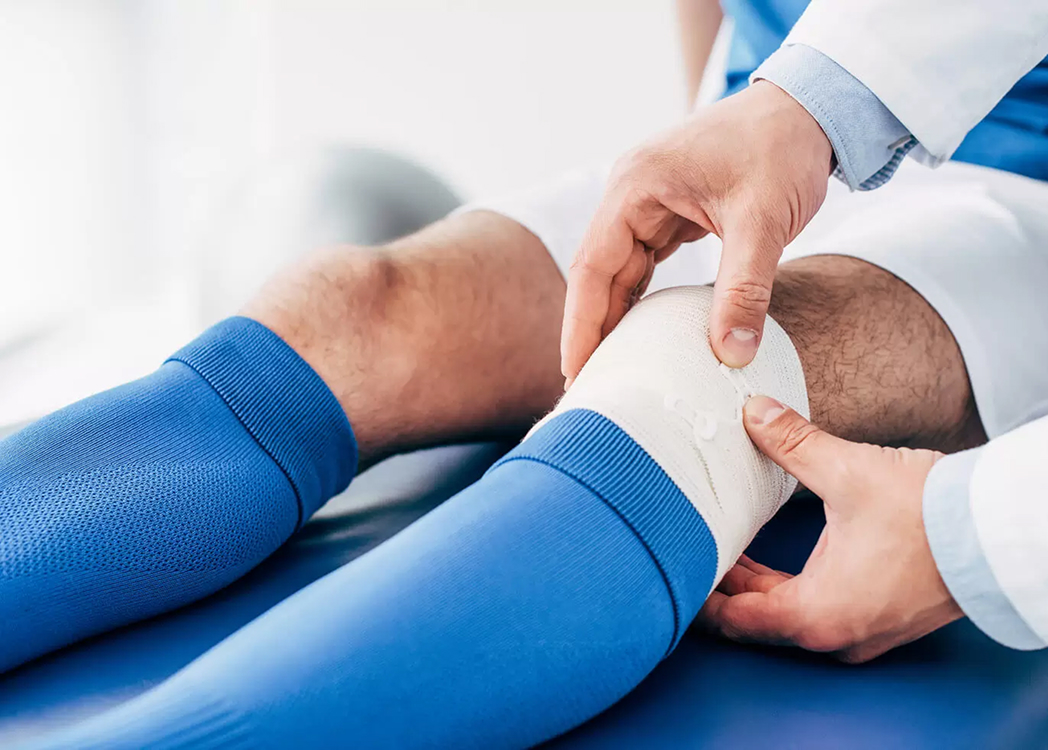
An ACL tear is a significant knee injury, but it does not have to be a career-ending one. With the right management plan, most athletes can return to their pre-injury level of sport.
You are lying on the football pitch, clutching your knee. That sickening pop. The immediate swelling. The overwhelming question racing through your mind is simple.
Will I play sport again?
As a fellowship-trained knee subspecialist with dual FRCS (UK) and FRACS (Australian) credentials, I have guided hundreds of athletes through ACL recovery. From weekend warriors to competitive players, I understand your concern is not just about your knee. It is about your identity, your fitness, and whether you will return to the game you love.
This comprehensive guide walks you through everything. We will cover understanding your injury, the diagnosis process, treatment decisions, what happens during surgery, and the critical role of rehabilitation in getting you back to competitive performance.
The anterior cruciate ligament (ACL) is one of four major ligaments stabilising your knee joint. Located in the centre of your knee, the ACL connects your femur (thighbone) to your tibia (shinbone). It creates a crucial stabilising structure that prevents excessive forward movement and controls rotation.
Your ACL is essential for these dynamic movements
For active athletes, your ACL is the difference between explosive cutting movements and the frustrating reality of a knee that buckles when you need it most.
ACL injuries typically occur through non-contact mechanisms. In fact, 70-80% of cases happen without a tackle or collision.
Typical injury scenarios include
Sports with the highest ACL injury risk include football (soccer), rugby league and union, basketball, netball, skiing, and Australian Rules Football.
We classify injuries into three grades.
Source: Journal of Orthopaedic & Sports Physical Therapy (2024)
If you have torn your ACL, you will typically experience specific immediate symptoms.
Within 2 to 6 hours, you will likely notice rapid knee swelling due to bleeding into the joint. You may also lose your range of motion due to this pain and swelling.
If you experienced an audible “pop” followed by rapid swelling during sport, you need specialist assessment promptly. These symptoms strongly suggest you have torn your ACL.
In the days and weeks following the injury, symptoms often evolve. You may experience persistent swelling, stiffness, and deep knee pain. A common issue is quadriceps weakness where it becomes difficult to activate your thigh muscle.
Crucially, you may feel recurrent instability during walking or using stairs. If untreated, chronic ACL deficiency causes recurrent “giving way” episodes. This limits your activity and can lead to secondary swelling after physical exertion. It also significantly increases the risk of meniscal tears from ongoing instability.
Specialist assessment includes specific physical tests.
The Lachman Test is the most sensitive test for ACL tears. It is performed with your knee slightly bent to assess the forward movement of your shin bone. It has an 85-95% accuracy for detecting ACL tears.
The Pivot Shift Test is the most specific test for ACL deficiency. It replicates the rotational instability you experience during activities. A positive test confirms functional ACL deficiency.
MRI provides detailed visualisation essential for accurate diagnosis. It has a sensitivity of 95-98% for complete ACL tears.
An MRI reveals
We typically schedule the MRI 1-2 weeks post-injury once acute swelling subsides. This allows for optimal image quality and surgical planning.
Do you need surgery? Not every ACL tear requires reconstruction. Your pathway depends on your athletic goals, activity level, and how aggressive you want your return-to-sport plan to be.
You may benefit from conservative management if you fit specific criteria.
Conservative treatment demands commitment. It involves an intensive physiotherapy programme lasting 3-6 months to build compensatory strength. You will focus on targeted quadriceps and hamstring strengthening to create muscular stability.
Success rates for conservative treatment show that 60-70% of patients return to pre-injury activity levels. However, success decreases significantly for high-pivoting sports. Without reconstruction, active individuals face a significantly higher risk of secondary meniscal tears and early-onset osteoarthritis from ongoing instability.
You may benefit from surgical reconstruction if you fit the active profile.
ACL reconstruction delivers results by eliminating instability. Your knee won’t buckle during cutting or pivoting. It protects your joint by preventing secondary damage and gets you back in the game. Approximately 85-90% of patients return to pre-injury competitive sport levels after surgery.
Like all surgical procedures, ACL reconstruction carries risks that we discuss thoroughly during your consultation.
Common Risks
Uncommon Risks
It is important to note that these risks are significantly lower than the risks of living with untreated ACL deficiency. Untreated instability leads to secondary meniscal tears in 40-50% of patients within 5 years.
ACL reconstruction is performed as a minimally invasive arthroscopic (keyhole) procedure. The surgery typically takes 60-90 minutes, and most patients are discharged the same day or the following morning.
The process involves
The question everyone asks is “When can I play again?”
The realistic expectation for competitive sport return is 9-12 months post-surgery. This is not arbitrary. It is based on tissue healing biology and evidence demonstrating that earlier return significantly increases re-injury risk.
Phase 1. Foundation Building (Weeks 0-6)
The goal is to reduce swelling and restore range of motion. You will focus on walking without crutches and achieving 90-degree knee flexion.
Phase 2. Power Development (Weeks 6-12)
We build athletic strength in the quadriceps and hamstrings. You will progress to single-leg stance exercises and light treadmill running.
Phase 3. Performance Training (Months 3-6)
This phase focuses on sport-specific strength and explosive power. You will begin controlled sprinting and agility drills.
Phase 4. Game-Ready Progression (Months 6-12)
The final push involves achieving competitive fitness. You will move from controlled match play to a graduated return to full competition.
I do not clear athletes for sport return based on time alone. Before returning, you must achieve specific objective criteria.
As a fellowship-trained knee subspecialist, I have performed over 300 ACL reconstructions. My surgical technique prioritises three key elements.
I am not here to push you towards surgery if you do not need it. However, if you are playing pivoting sports and want to return to a competitive level, surgical reconstruction is worth serious consideration.
If you have experienced an ACL injury, I can provide expert assessment and personalised treatment recommendations.
During your consultation, I will review your imaging, examine your knee, and discuss your specific activity goals. We will develop a personalised treatment plan tailored to your injury.
South West Sydney Locations
Mid North Coast Locations
Accessing subspecialist care close to home saves you time and ensures consistent follow-up throughout your 12-month recovery journey.