TREATMENTS

Osteotomy Surgery

Osteotomy Surgery in South West Sydney
& the Mid North Coast

Knee osteotomy is a precise, joint-preserving surgery designed for active patients with one-sided knee arthritis. It involves realigning the leg (either the tibia or femur) to shift load away from the damaged cartilage and onto the healthy side of the joint.

Delays Knee Replacement

By correcting alignment, osteotomy can relieve pain and delay the need for a total knee replacement for 10-20 years or more.

Preserves Your Joint

This procedure preserves your native knee joint, its ligaments, and natural mechanics.

Enables Active Lifestyles

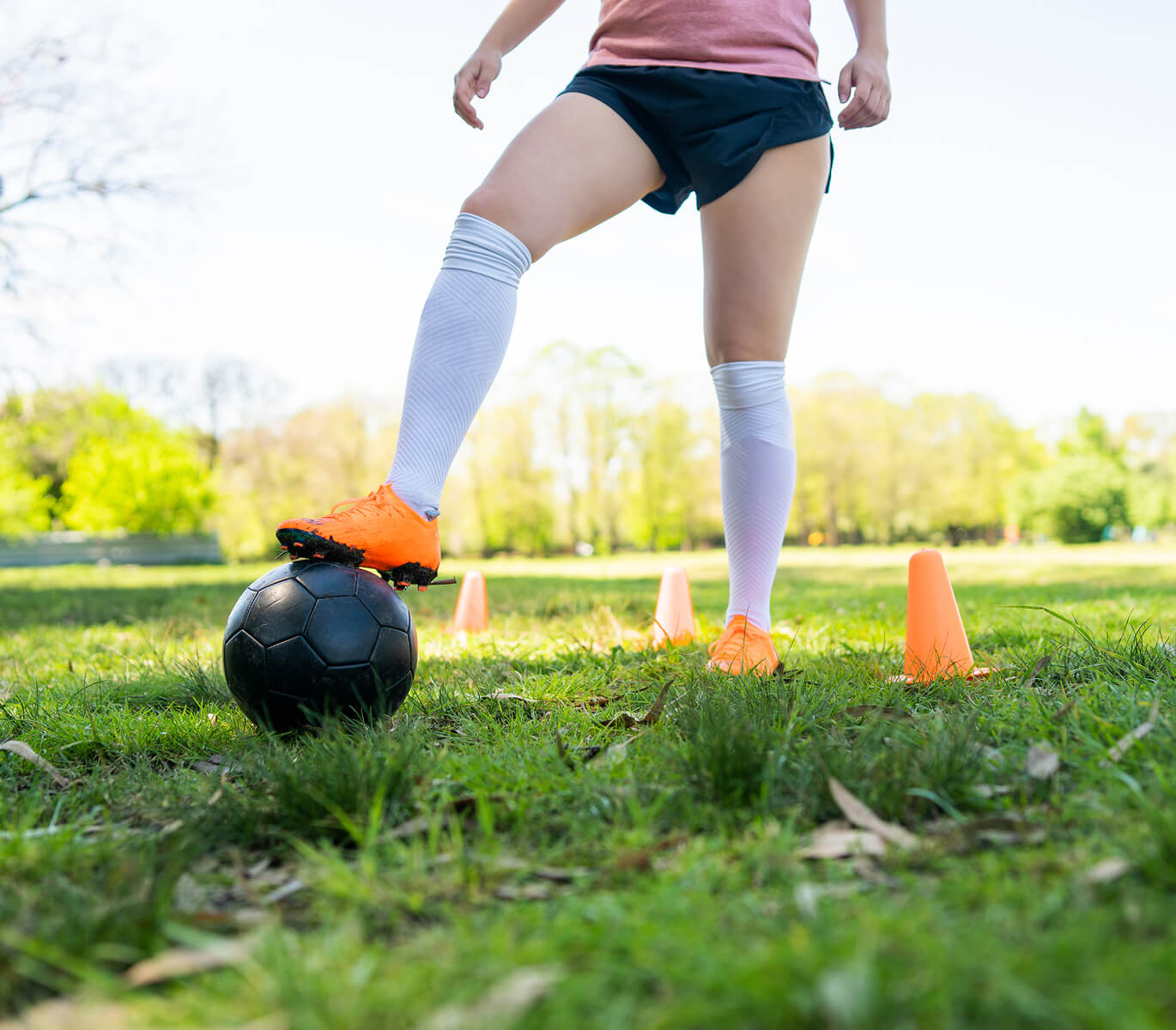
It is a highly effective option for younger (30-60) patients who want to return to high-impact sports or manual labour.

The Solution for Active Patients with Unicompartmental Arthritis

Many active people in their 40s and 50s are told they are in a frustrating treatment gap. Your knee pain is significant, but you are "too young for a knee replacement". This can feel like a no-win situation. You are told to stop the activities you love while you wait for your joint to deteriorate further.
 
There is a better solution. Osteotomy is a joint-preserving procedure that directly addresses this problem. As a fellowship-trained knee subspecialist, Dr Richard Allom uses this advanced technique to correct your leg's alignment. This adjustment shifts your body weight away from the damaged cartilage and onto the healthy, undamaged side of your knee.

The goal is to break the cycle of wear and tear. This can significantly relieve pain, preserve your own knee joint, and delay or even prevent the need for a knee replacement for many years. For the right patient, it is an excellent pathway back to an active lifestyle.

Book Your Consultation

If you are an active patient with one-sided knee arthritis, you may not have to "wait for a knee replacement." Osteotomy is an excellent joint preservation option that can provide years of pain relief and active living.
How Alignment Causes Arthritis

In a healthy knee, your weight is distributed evenly across the joint. A line from your hip to your ankle passes directly through the centre of the knee. This balance protects the cartilage.

Varus Alignment

Bow-Legged

If you have a bow-legged (varus) alignment, the line shifts inwards. This overloads the inside (medial) part of your knee. This constant pressure wears down the medial cartilage, leading to arthritis. It creates a vicious cycle. The arthritis worsens the alignment, which in turn accelerates the wear.

Valgus Alignment

Knock-Kneed

If you have a knock-kneed (valgus) alignment, the line shifts outwards. This overloads the outside (lateral) part of your knee, causing accelerated wear and arthritis in that compartment.

Osteotomy surgery corrects this mechanical alignment. It breaks the cycle by moving the load back to the healthy cartilage, halting the progression of the arthritis.

Who is a Good Candidate for Osteotomy?

This procedure is highly effective, but meticulous patient selection is critical for success. You may be an ideal candidate if you match this profile:
Age and Activity
You are typically between 30 and 60 years old and active, wishing to continue impact sports or manual labour.
Arthritis Pattern
You have arthritis affecting only one compartment (either medial or lateral) of the knee.
Healthy Cartilage
The "opposite" side of your knee and the joint under your kneecap are healthy or have only mild changes.
Joint Status
You have a good range of motion (can bend the knee to at least 90-100 degrees) and stable ligaments.
Patient Factors
You are a non-smoker (or willing to quit) with a healthy BMI and are committed to a structured 6-12 month rehabilitation programme.

When is Osteotomy Not Recommended?

This surgery is generally not the right choice if you have:
Tricompartmental Arthritis
Arthritis affecting all three parts of your knee.
Inflammatory Arthritis
Conditions like rheumatoid arthritis.
Severe Stiffness
A knee that cannot bend to 90 degrees.
Other Factors
Severe obesity (BMI > 40), active infection, or significant vascular disease.

Types of Knee Osteotomy

Dr Allom often combines osteotomy with other procedures, such as an ACL reconstruction or cartilage repair, to treat all issues at once. The two main types of osteotomy are:

High Tibial Osteotomy (HTO)

This is the most common type. It is used to correct varus (bow-legged) alignment in patients with medial (inner) compartment arthritis. Dr Allom performs an "opening wedge" HTO. A precise cut is made in the upper tibia (shinbone), and a wedge-shaped gap is gently opened. This gap is stabilised with a modern, strong locking plate and screws, which realigns the leg.

Distal Femoral Osteotomy (DFO)

This is less common and is used to correct valgus (knock-kneed) alignment in patients with lateral (outer) compartment arthritis. The corrective cut and plate are placed in the distal femur (thighbone) just above the knee joint.

The Surgical Procedure:
A Focus on Precision

A successful osteotomy depends on millimetre-perfect correction.

Advanced Digital Planning

Before surgery, Dr Allom uses specialised software to analyse full-length standing X-rays of your leg. He precisely calculates the exact correction angle needed to shift your weight from the damaged compartment to the healthy one. This digital plan simulates the post-operative result to ensure a perfectly balanced knee.

The Surgery (Opening Wedge HTO)

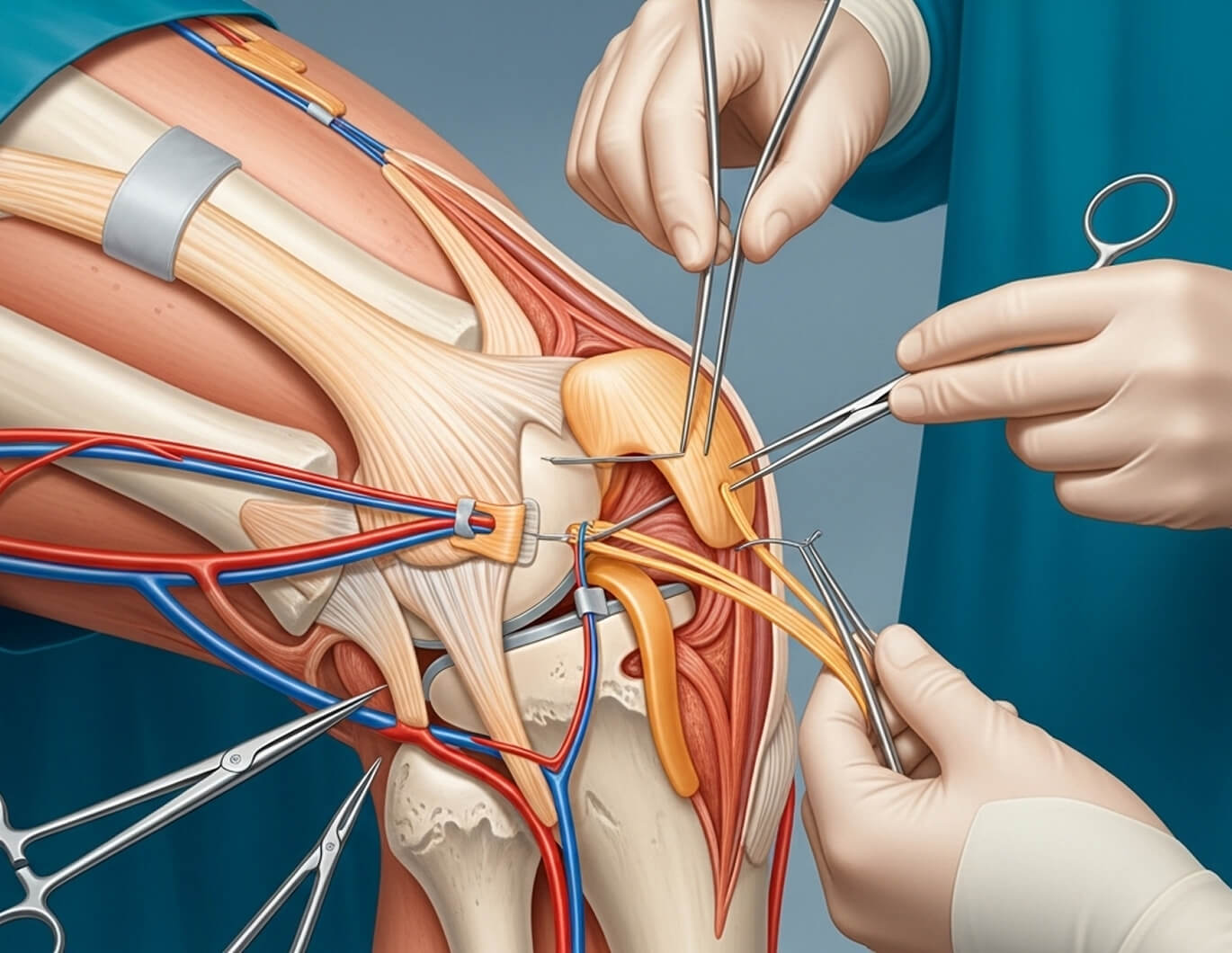
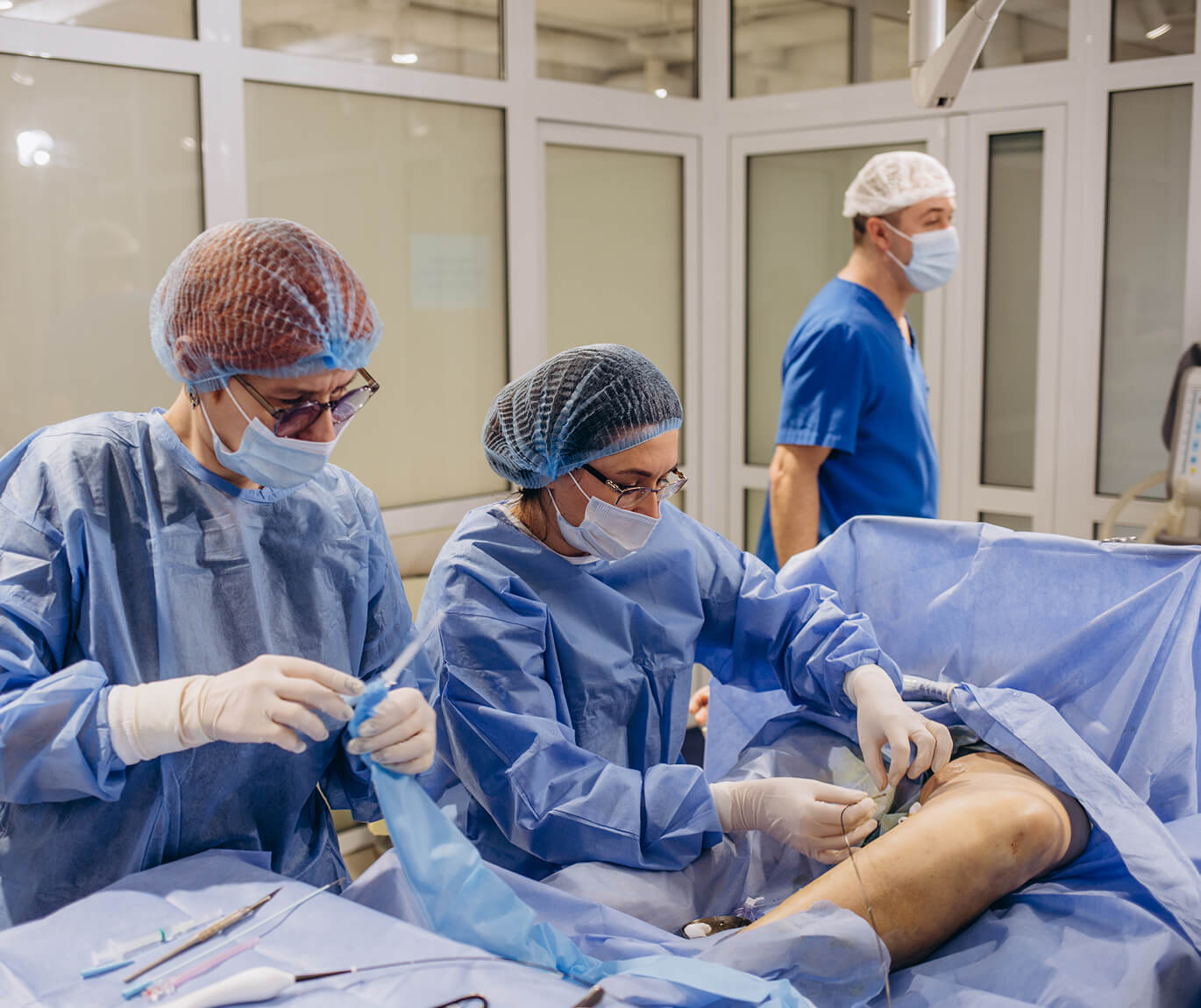
The procedure is performed under anaesthetic and typically takes 60-90 minutes.
  • An incision is made over the inner side of the upper tibia.
  • Using X-ray guidance (fluoroscopy), a precise bone cut is made, leaving a small "hinge" of bone intact.
  • The cut is gradually opened, realigning the entire leg to match the digital plan.
  • A modern, low-profile locking plate and screws are fixed in place to provide rigid stability.
  • The bone gap may be filled with a bone graft or substitute to encourage healing.

When Persistent Pain is "Normal" vs Concerning

You will typically stay in the hospital for one to two nights. A nerve block and medications will manage post-operative pain. Physiotherapy begins on day one, and you will learn to walk with crutches using partial weight-bearing.

Activity Modification

  • Weight management reduces knee stress, assistive devices support mobility during flare-ups, and pacing activities avoids overexertion.

Recovery and Rehabilitation Timeline

Rehabilitation for osteotomy requires patience. Bone healing is the priority. Your commitment to the physiotherapy programme is essential for a successful outcome.

Protection and Healing

Weeks 0-6

  • Goal: Protect the healing bone, manage swelling, and regain gentle motion
  • Activity: You will use crutches with partial weight-bearing (20-30kg) for the first 2-6 weeks, as guided by Dr Allom and your X-rays.
    You will work on gentle motion, aiming for 0-90 degrees of bend by week 2.

Progressive Strengthening

Weeks 6-12

  • Goal: Achieve full weight-bearing and normalise your walking pattern.
  • Activity: Once X-rays show good healing (around 6 weeks), you can gradually wean off crutches. You will start progressive strengthening with exercises like stationary cycling, swimming, and light leg presses. You can typically return to sedentary work at 2-4 weeks and light-duty work at 6-8 weeks.

Advanced Rehabilitation

Months 3-6

  • Goal: Restore full strength (matching the opposite leg) and begin impact activities.
  • Activity: 3-month X-rays confirm complete healing. You can now progress to jogging (around 4-5 months), agility drills, and sport-specific training. Return to heavy labour is often possible around 3-4 months.

Return to Sport

Months 6-12

  • Goal: A safe and gradual return to your chosen sport.
  • Activity: Low-impact sports (cycling, golf) may resume around 4-6 months. Running can begin around 5-6 months. A return to high-impact and contact sports (tennis, football, basketball) is typically possible between 6 and 12 months, once you pass functional and strength tests.

Outcomes and Longevity

Pain Relief

Most patients (80-90%) report significant pain relief and improved function for daily activities.

Return to Sport

65-75% of patients are able to return to impact sports. 85-95% return to low-impact sports.

Longevity (Survival)

The primary goal is delaying knee replacement. "Survival" means the time until a knee replacement is needed.
  • 10-Year Survival: 75-85% of patients
  • 15-Year Survival: 60-70% of patients
  • 20-Year Survival: 50-60% of patients The best outcomes are seen in patients under 50, non-smokers, those with normal BMI, and those who had an accurate surgical correction.

Osteotomy vs Knee Replacement

This is the most common question for active patients. The choice depends on your age, arthritis pattern, and activity goals.

Advantages of Osteotomy

Preserves Your Native Joint

You keep your own knee, ligaments, and cartilage.

Enables High-Impact Sports

Running and pivoting sports are possible, which are restricted after a knee replacement.

No Implant Wear

There are no plastic or metal parts to wear out.

Keeps Future Options Open

A knee replacement is still a straightforward option later in life.

Advantages of Knee Replacement

For young, active patients with one-sided arthritis, osteotomy is often the preferred choice to preserve the joint and maintain a high-impact lifestyle. Dr Allom will discuss both options transparently with you.

Definitive Solution

It is a final solution for arthritis pain (osteotomy may require replacement later).

Faster Recovery

Recovery to general activity is often quicker (3-4 months vs 6-12).

Suits All Arthritis

It can be used for tricompartmental (whole-knee) arthritis.
For young, active patients with one-sided arthritis, osteotomy is often the preferred choice to preserve the joint and maintain a high-impact lifestyle. Dr Allom will discuss both options transparently with you.

Can I have a Knee Replacement after an Osteotomy?

Yes. An osteotomy does not compromise a future knee replacement. The procedure is slightly more complex, but the outcomes are comparable to a primary knee replacement. This strategy allows you to delay your replacement by 10-20 years, improving the long-term prospects of your implants.

Activity Modification

  • Weight management reduces knee stress, assistive devices support mobility during flare-ups, and pacing activities avoids overexertion.

Why Choose Dr Richard Allom for Osteotomy Surgery

Osteotomy is a technically demanding procedure that requires subspecialist expertise for precise planning and execution.

Fellowship-Trained Knee Subspecialist

Dr Allom is an orthopaedic surgeon with dual international fellowship credentials (FRCS (Eng) and FRACS (Orth)). His advanced training focussed specifically on complex knee surgery and joint preservation techniques.

Extensive Osteotomy Experience

He has extensive experience in both high tibial (HTO) and distal femoral (DFO) osteotomy.

Precision Digital Planning

Dr Allom uses modern computer-assisted planning for all osteotomies to ensure millimetre-perfect correction and optimal alignment.

Phase 4 (Months 6-12)

Return to Sport Preparation
Introduction of running, agility drills, jumping and landing exercises (plyometrics). Training becomes more sport-specific.

Phase 5 (Months 12-18)

Return to Competition
Gradual, supervised return to competitive sport, often with a functional brace initially. Ongoing strength and conditioning are vital.

Modern Surgical Techniques

He uses modern, rigid locking plates and evidence-based protocols to promote reliable healing and enable early mobilisation.

Geographic Accessibility

Dr Allom provides this subspecialist expertise locally at convenient locations across South West Sydney and the Mid North Coast.

Frequently Asked Questions

This procedure provides 10-20+ years of improved function for most patients. Survival rates are high, with 75-85% of osteotomies still functioning well at 10 years, and 60-70% at 15 years. It is a long-term solution, not a temporary fix.

Yes, for many patients. Studies show 60-80% of patients return to running, depending on their pre-operative level and rehabilitation. Return to recreational running has a high success rate (70-80%). A gradual return is guided by your physiotherapist, starting around 5-6 months after surgery.

Pain is generally moderate and well-controlled. The first few days are managed with a nerve block and strong medications in hospital. This gradually transitions to oral medications, and most patients report mild, activity-related pain after the first 2-6 weeks.

Usually not. Modern plates are low-profile and designed to stay in permanently. Removal is a simple outpatient procedure considered only after 12-18 months if the hardware causes discomfort.

Next Steps

Understanding your knee function is key to finding the right treatment. Whether your score is low or you are tracking recovery.

What to Bring: Please bring your referral letter, all relevant imaging studies (X-rays, CT scans, MRI if performed), and your list of current medications to your consultation.
Convenient Locations in Two Regions

I consult and operate from five locations, providing local access to subspecialist expertise without the need for long-distance travel.

South West Sydney Locations

Phone Number

04 3818 3832

Gledswood Hills

The George Centre, Suite 12, 1A The Hermitage Way

Campbelltown

Centric Park, Level 3, 4 Hyde Parade

Liverpool

Sydney South West Private Hospital, Suite 3.02, 24-40 Bigge Street

Mid North Coast Locations

Phone Number

02 6551 0722

Taree

Mayo Private Hospital Specialist Suites, 2 Potoroo Drive

Forster

Dolphin Suites Consulting Rooms, 33 Breckenridge Street

Related Information

ACL Injury
That pop you felt in your knee during the game. The rapid swelling.
Meniscal Tears
A meniscal tear is one of the most common knee injuries and can happen to anyone.
PCL Rupture
This injury is much less common than an ACL tear but often occurs alongside other ligament damage.
Multiligament knee injury
Means you have damaged two or more of the main ligaments in your knee at the same time.
Multiligament reconstruction
Complex surgery to rebuild two or more torn major knee ligaments, restoring stability after severe trauma.

Book Your Consultation

©2026 Dr Richard Allom. All rights reserved.

Oxford Knee Score Questionnaire

Please answer the following 12 questions about your knee, considering your symptoms over the past 4 weeks. Select one answer for each question.