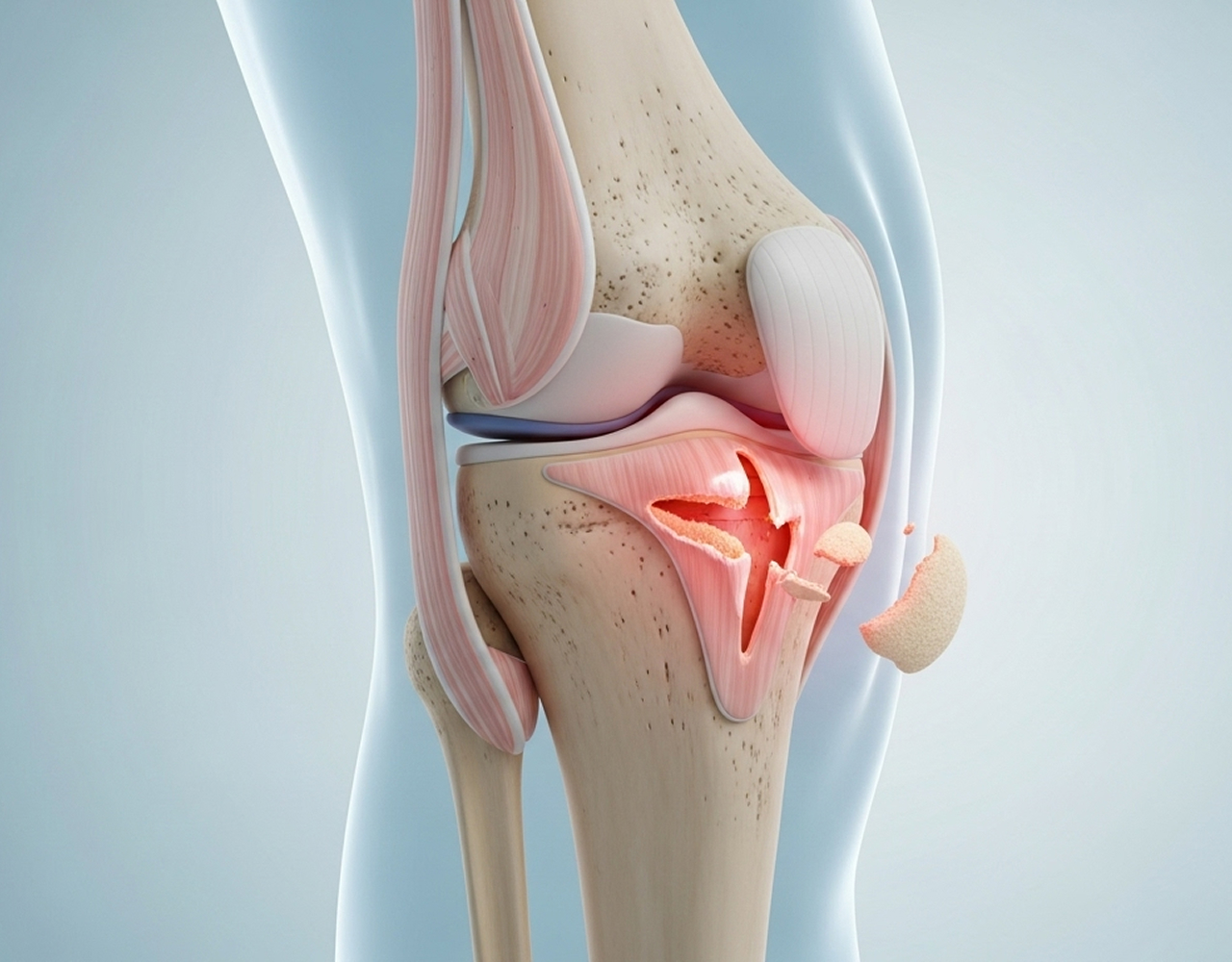
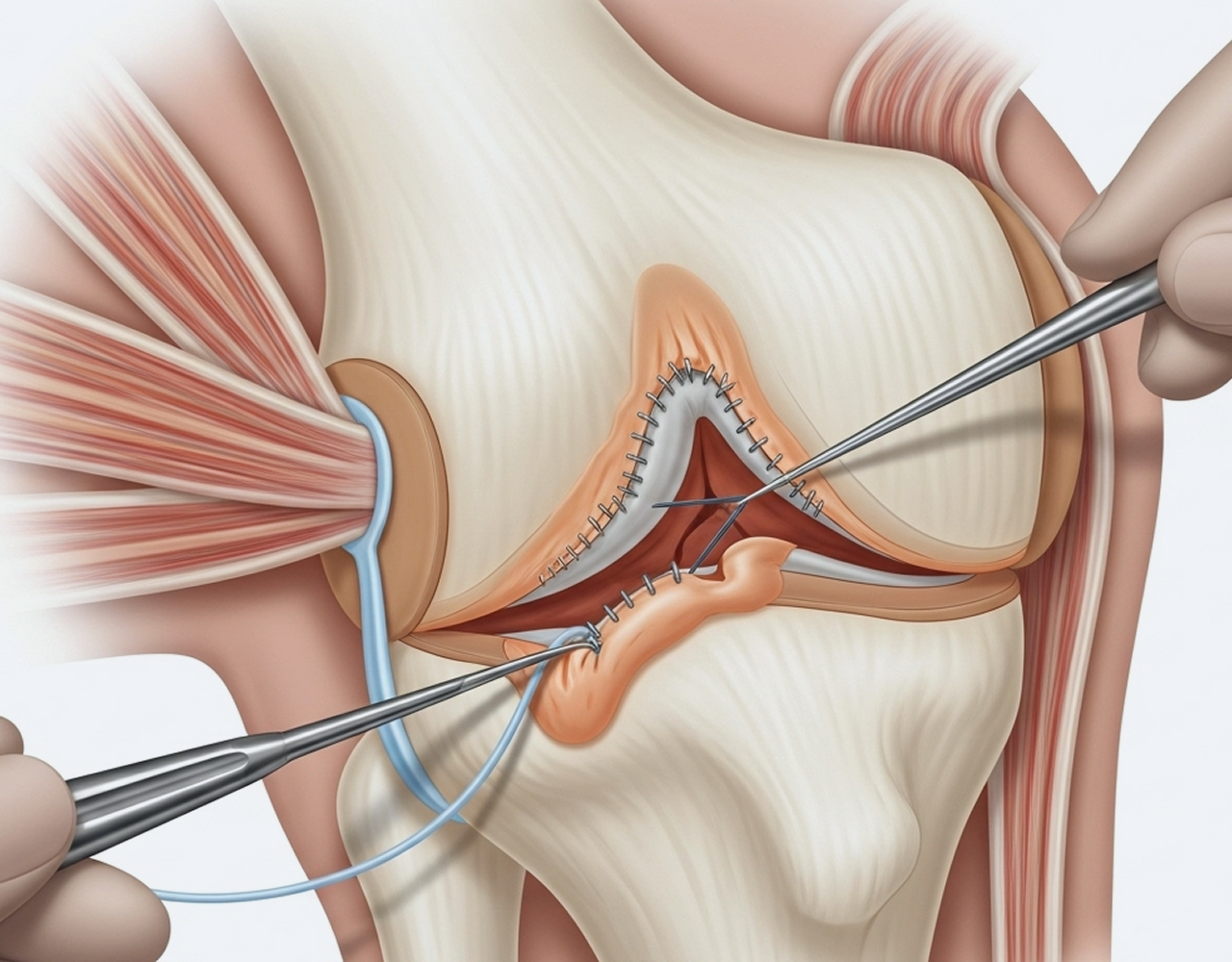
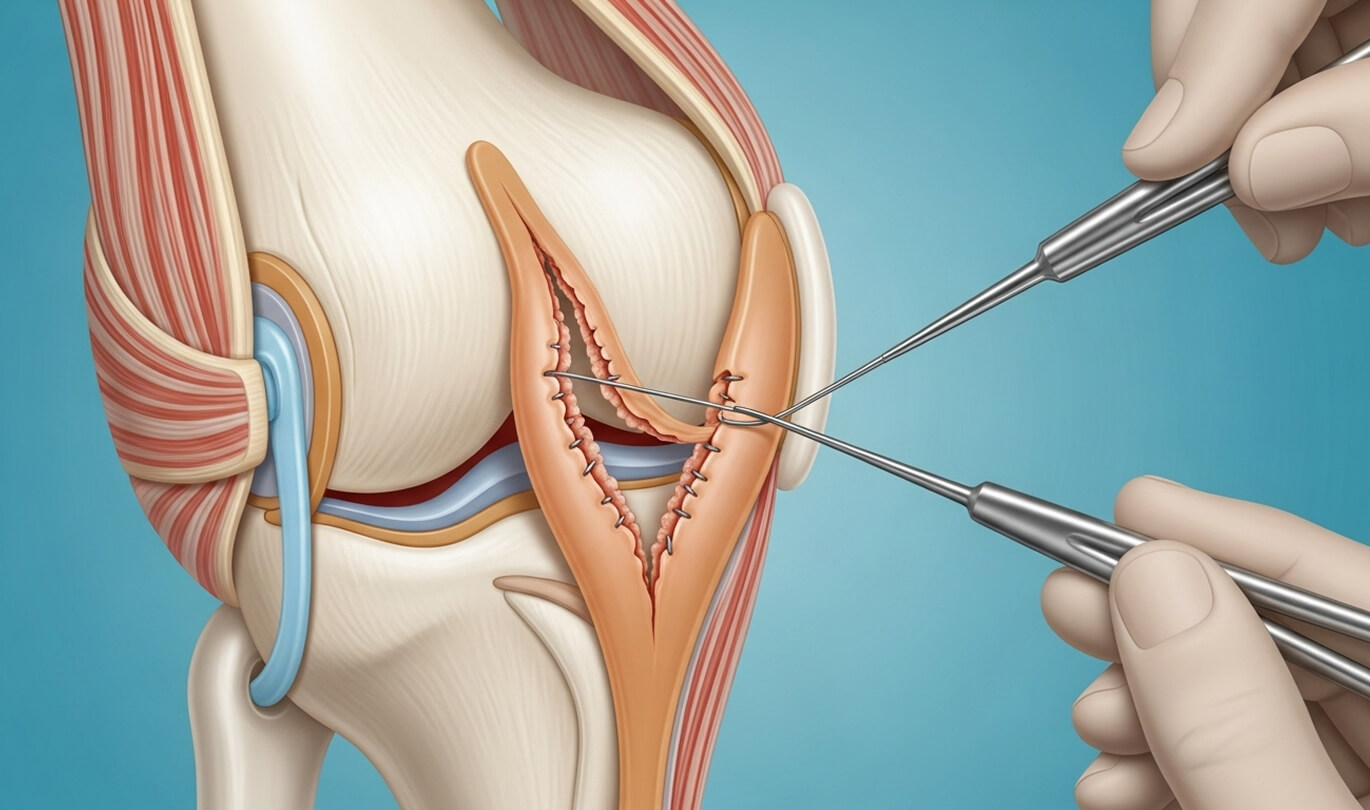
The meniscus plays a vital role in protecting your knee joint. When you sustain a meniscal tear, the knee can become painful, unstable, and prone to further injury. By repairing the meniscus, we aim to restore its function completely. The main goal is to protect the articular cartilage, which is the smooth lining on the ends of your bones. Preserving the meniscus helps to distribute forces evenly across the knee and maintain joint health.
This is a key part of Dr Allom’s joint preservation philosophy. It is a core focus of his practice and a subject on which he has published peer-reviewed research. He believes that saving your natural tissue is the best investment in the long-term health and function of your knee.
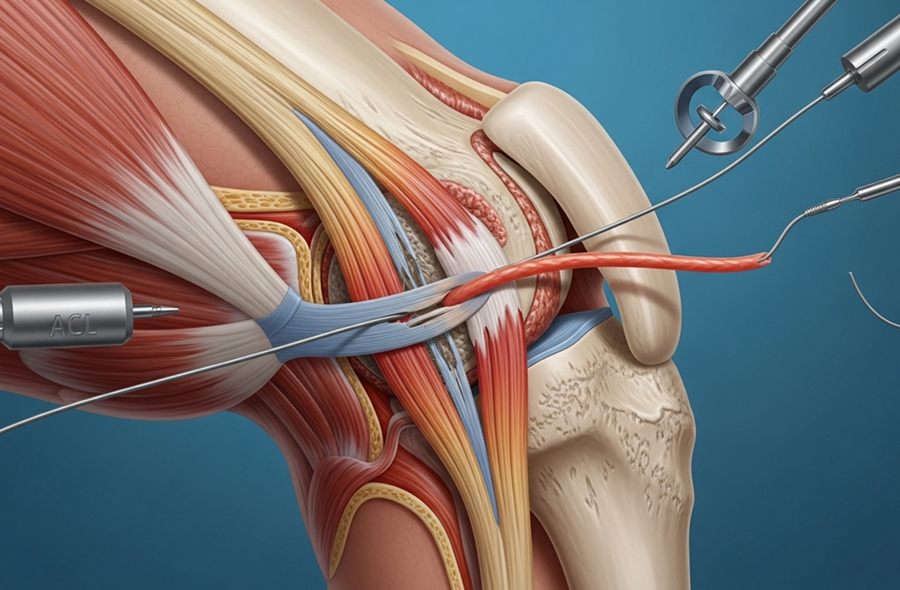
A small camera called an arthroscope is inserted. This allows Dr Allom to see the inside of your joint clearly on a high-definition monitor.
You will need to wear a knee brace and use crutches. For this critical healing period, you will be on restricted weight-bearing to protect the repair.
You will begin a formal physiotherapy programme to gradually restore your range of motion and start strengthening the muscles around your knee.
As the repair heals and your strength improves, you can gradually return to more demanding activities. A return to sport is typically considered around the 4 to 6-month mark.
Pain is a normal part of the initial recovery, but it is well-managed. You will be provided with a pain relief plan before you leave the hospital. Most patients find that the pain subsides significantly within the first week or two.
No. The specialised devices used for the repair are designed to be absorbed safely by your body over time as the meniscus heals. Nothing needs to be removed later.
Arthroscopic surgery is very safe. However, like any procedure, it has small risks, including infection, blood clots, and stiffness. There is also a risk that the repair does not heal. Dr Allom will discuss these risks with you in detail.
The longer recovery is essential to protect the stitches while the cartilage heals. Cartilage has a limited blood supply and heals slowly. The restricted weight-bearing in the first six weeks gives the meniscus the best possible environment to heal strongly.
In the unlikely event a repair does not heal, the goal is still joint preservation. A subsequent keyhole procedure would only remove the small, unstable portion of the meniscus that did not heal, while still preserving all of the healthy tissue.
If you are dealing with knee pain or think you may have a meniscal tear, a specialist assessment is the right next step.
What to Bring: Please bring your referral letter, all relevant imaging studies (X-rays, CT scans, MRI if performed), and your list of current medications to your consultation.