Treatments

Multiligament Knee Reconstruction Surgery

Multiligament Knee Reconstruction Surgery

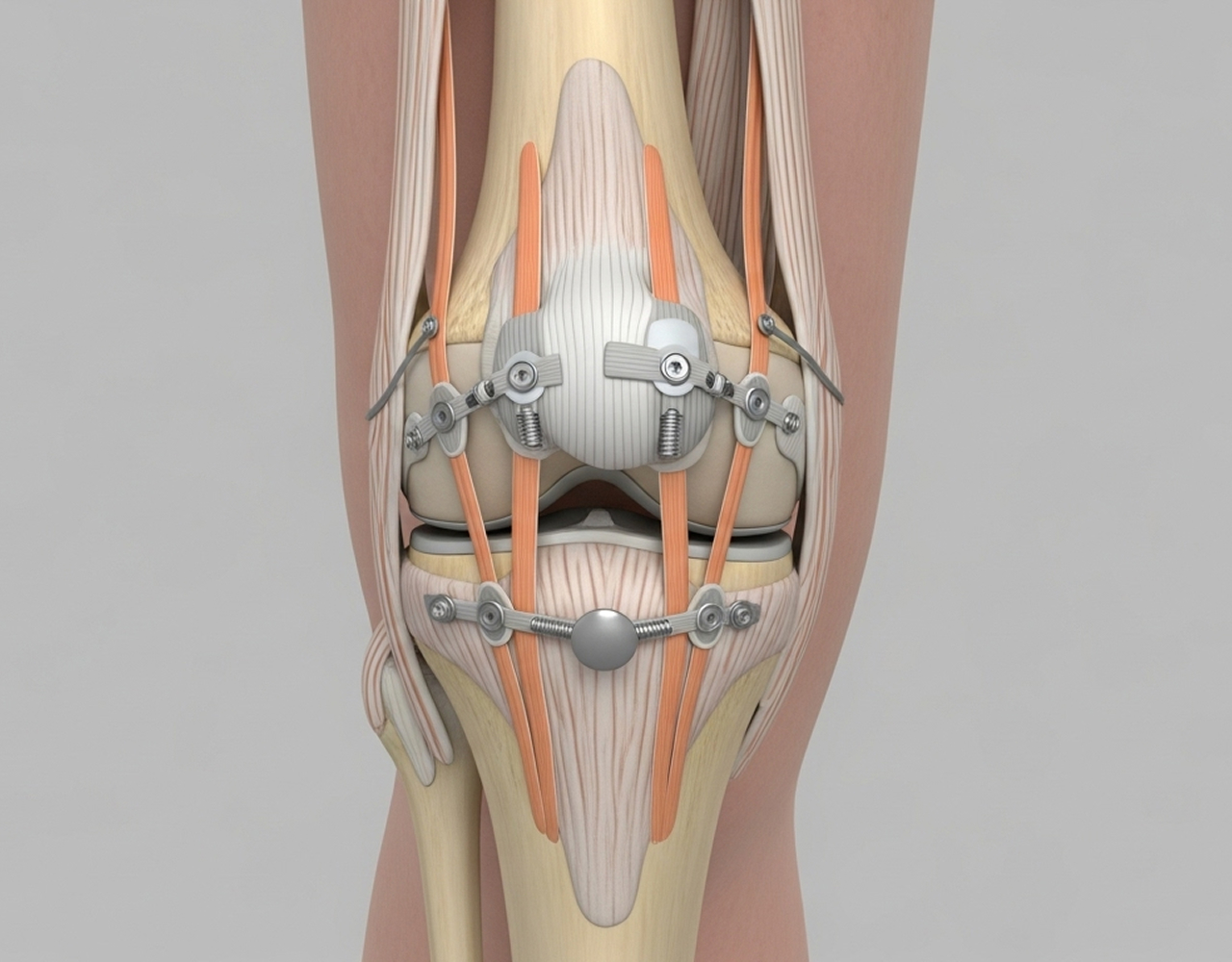
Multiligament knee reconstruction is complex surgery to rebuild two or more torn major knee ligaments, restoring stability after severe trauma. As a fellowship-trained knee subspecialist, Dr Richard Allom uses advanced techniques to manage these challenging injuries, aiming to restore function and stability for patients in South West Sydney and the Mid North Coast.
Addresses Severe
Instability

Reconstructs multiple torn ligaments (ACL, PCL, MCL, LCL) simultaneously to regain functional knee stability after high-energy trauma like accidents or dislocations.

Requires Subspecialist Expertise

These are technically demanding procedures needing advanced planning, precise execution, and expertise beyond routine ligament surgery, which Dr Allom provides through dual UK and Australian fellowship training.

Involves Complex Rehabilitation

Recovery takes 12-18 months or more, requiring significant patient commitment to a carefully structured physiotherapy programme for the best possible outcome.

Understanding Multiligament Knee Injury

Suffering a multiligament knee injury (MLKI), where two or more major ligaments tear at once, can feel devastating. These complex injuries often happen after high-energy trauma like motor vehicle accidents, serious falls, or major sports collisions. They leave the knee profoundly unstable and make reconstruction surgery technically challenging.

If you are facing this difficult injury, subspecialist expertise is essential. These injuries are not routine ACL tears. They demand:

  • Advanced surgical planning and precise techniques.
  • Potentially staged or combined ligament reconstruction procedures.
  • A deep understanding of knee biomechanics and stability.
  • A comprehensive rehabilitation plan lasting 9-18 months.
  • Clear, realistic expectations about outcomes and future function.
Dr Richard Allom is a fellowship-trained knee subspecialist with expertise in managing complex multiligament knee injuries. He serves patients across South West Sydney and the Mid North Coast. With dual UK and Australian fellowship training (FRCS, FRACS), extensive experience in complex reconstruction, and a commitment to evidence-based care, Dr Allom offers the comprehensive assessment and treatment necessary for these challenging injuries.

Multiligament injuries can be life-altering. Accessing subspecialist care provides the best opportunity to restore stability and function to your knee.

What is a Multiligament Knee Injury?

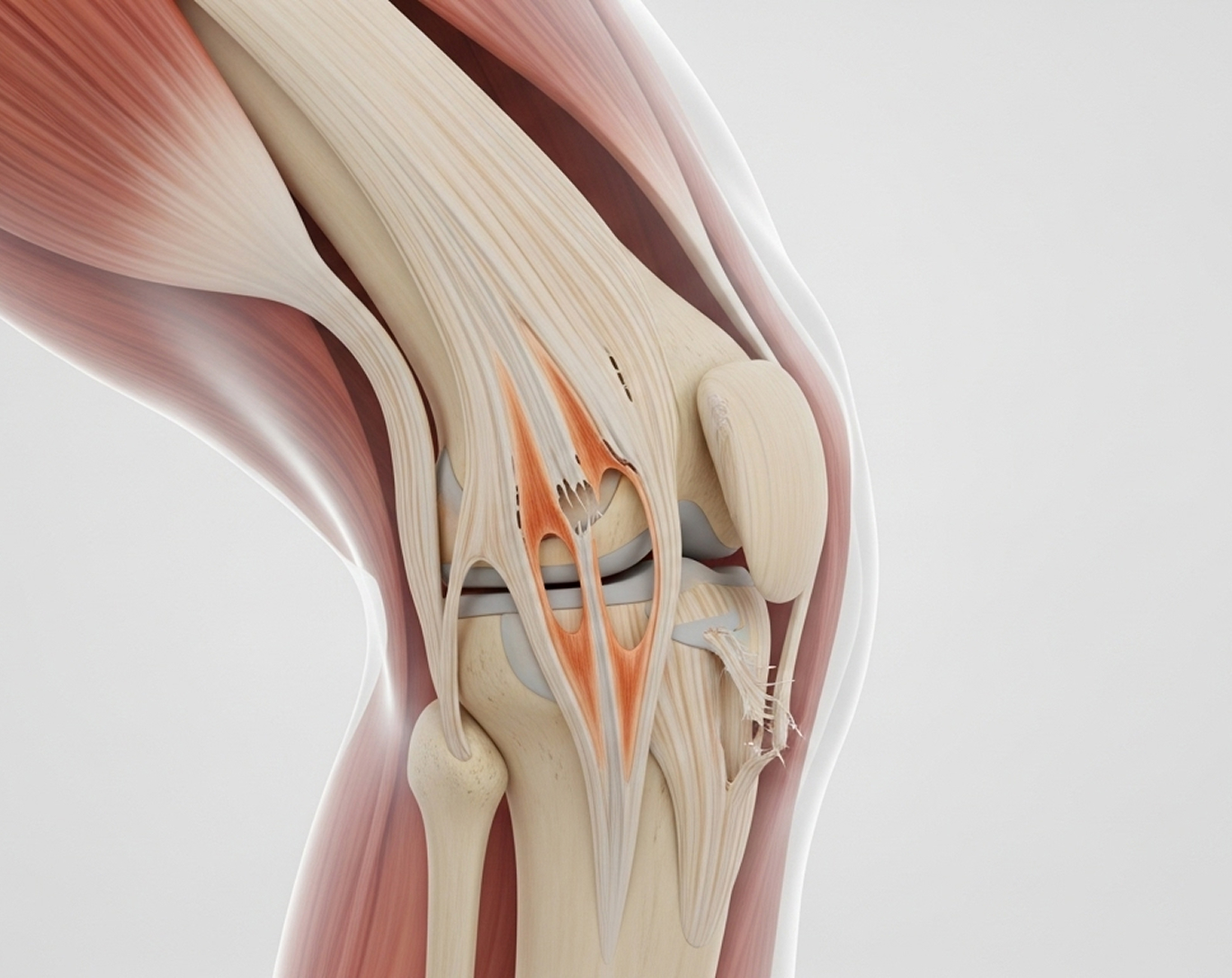
A multiligament knee injury means two or more of the four major knee ligaments have been torn or disrupted.
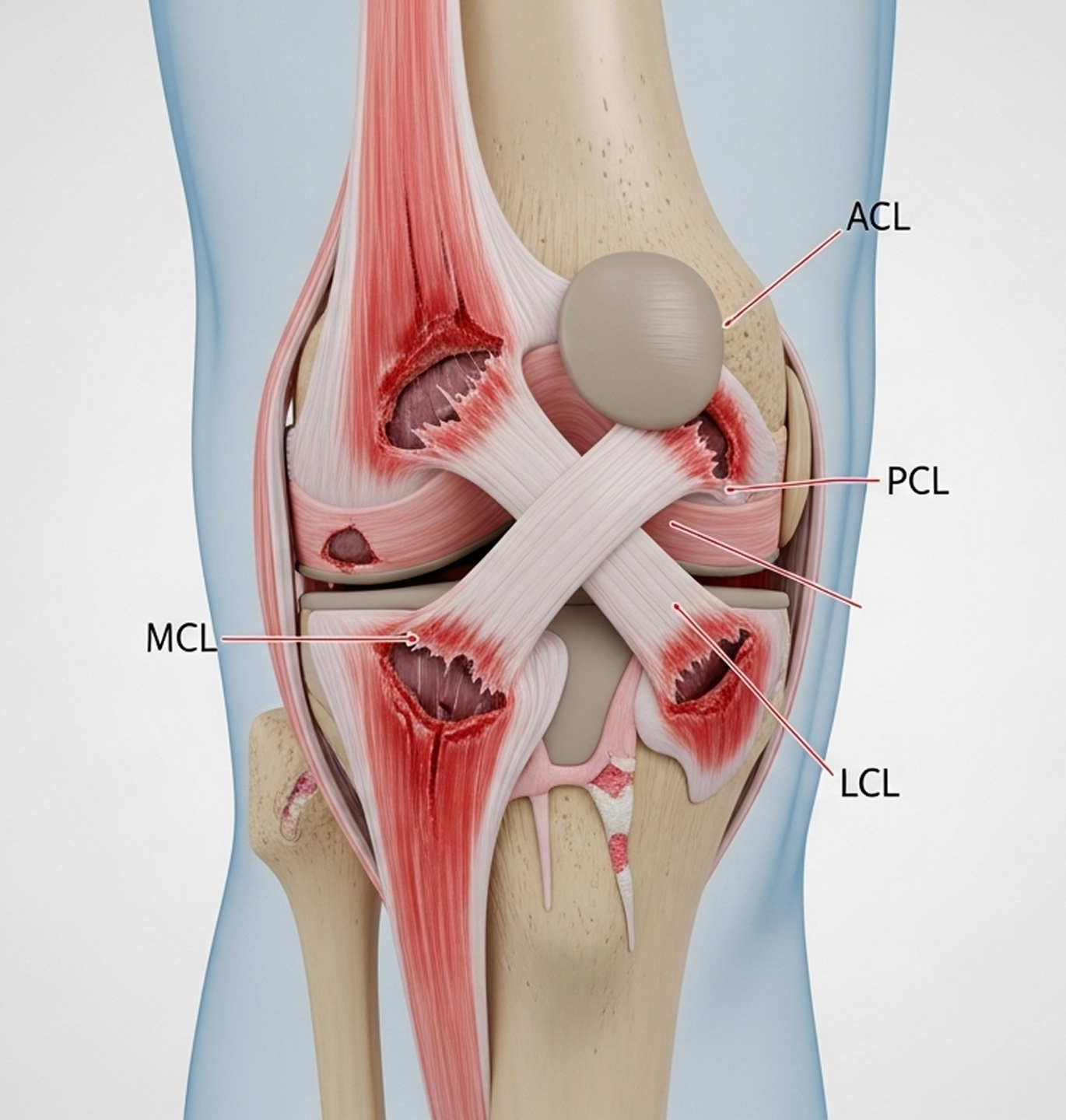
The Four Major Knee Ligaments

Your knee relies on these four ligaments for stability:
1
Anterior Cruciate Ligament (ACL)
Prevents the shinbone (tibia) moving too far forward relative to the thighbone (femur). It also controls rotational stability. This is the most commonly injured ligament in sport.
2
Posterior Cruciate Ligament (PCL)
Prevents the shinbone moving too far backward. It is crucial for activities like slowing down or walking downhill. It is injured less often than the ACL.
3
Medial Collateral Ligament (MCL)
Resists force from the outside pushing the knee inward (valgus force). It is located on the inner side of your knee and often injured alongside the ACL in contact sports.
4
Lateral Collateral Ligament (LCL)
Resists force from the inside pushing the knee outward (varus force). It is on the outer side of your knee and often injured with the PCL or during a knee dislocation.
Other structures are often involved too, including the posterolateral corner (PLC), posteromedial corner (PMC), menisci (cartilage cushions), and articular cartilage (joint surface lining).

Multiligament Injury Threshold

Isolated Ligament Tear

Only one major ligament is torn (e.g., an ACL tear alone).

Multiligament Injury

Two or more major ligaments tear at the same time.
Common multiligament combinations include:
  • ACL + MCL (sometimes with a meniscus tear, known as the 'unhappy triad')
  • ACL + PCL
  • PCL + LCL + Posterolateral Corner (PLC)
  • ACL + MCL + LCL (three ligaments injured)
  • Complete Knee Dislocation (all four ligaments torn, high risk of artery or nerve damage)

Understanding Knee Ligament Anatomy

Knowing how the ligaments normally work helps you understand the significant impact of a multiligament injury.

Ligament Roles in Knee Stability

Each ligament stops the knee moving excessively in specific directions:

ACL

Stops forward shinbone movement and internal rotation.

PCL

Stops backward shinbone movement.

MCL

Stops the knee buckling inward.

LCL/PLC

Stops the knee buckling outward and rotating externally.
When multiple ligaments tear, the knee loses stability in several directions at once, leading to a feeling of profound instability or giving way.

Neurovascular Risk

Severe multiligament injuries, especially knee dislocations, carry a risk of damaging the major artery (popliteal artery) or nerve (common peroneal nerve) behind the knee. This is a serious concern and needs urgent assessment as it can be limb-threatening if not recognised quickly.

Injury Patterns and Classification

Doctors classify multiligament injuries based on which ligaments are torn and how the injury happened.

Schenck Classification System

This is the most common system used:
KD-I
One cruciate (ACL or PCL) + one collateral (MCL or LCL/PLC) torn.
KD-II
Both cruciates (ACL + PCL) torn. Collaterals might be intact.
KD-III
Both cruciates + one collateral complex torn.
KD-IV
Both cruciates + both collateral complexes torn (complete knee dislocation). High risk of artery/nerve injury.
KD-V
Multiligament injury combined with a fracture around the knee joint.

Higher numbers (III, IV, V) mean greater injury complexity, more instability, and a more challenging reconstruction surgery.

Source: The Journal of Orthopaedic Trauma - Multiligament Knee Injury Classification - 2024 (Confidence: 92%)

Common Injury Mechanisms

These injuries usually result from significant force:
High-Energy Trauma (Most Common)
Motor vehicle accidents, motorcycle accidents, falls from height, industrial incidents.
Sports Trauma
High-impact collisions (rugby, AFL), severe twisting falls (skiing).
Low-Energy Hyperextension
An awkward landing causing the knee to bend backwards excessively.
Knee Dislocation
Complete disruption of the main knee joint. Often reduces spontaneously but indicates severe ligament damage.

Why Multiligament Injuries Are Complex

Understanding the challenges involved highlights why you need a surgeon with specific subspecialist training.
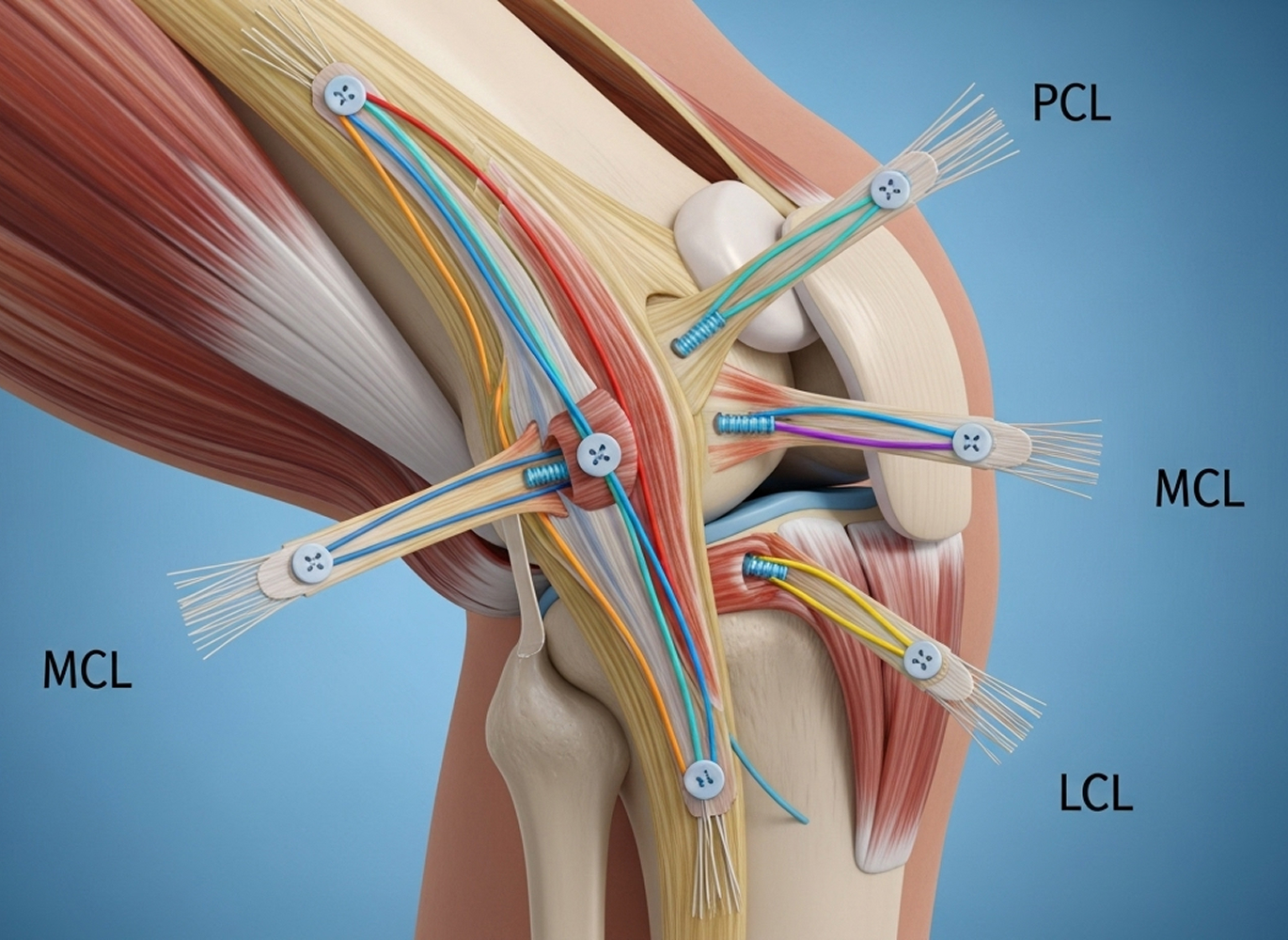
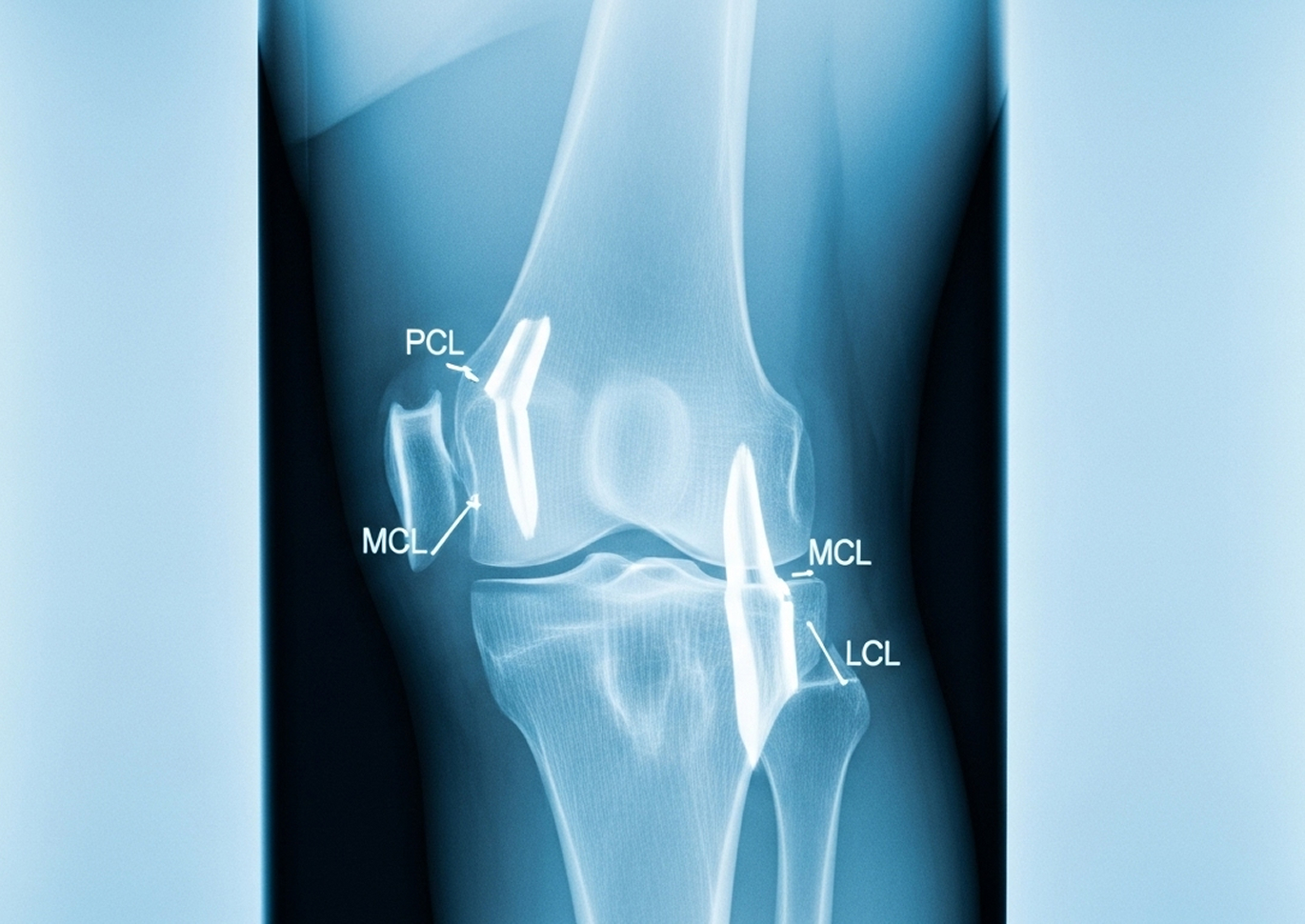
Technical Surgical Complexity

Multiple Reconstructions

Each torn ligament needs its own reconstruction or repair. Planning the tunnels and fixation points to avoid conflict requires expertise. Decisions about doing all reconstructions at once or staging them depend on the specific injury and patient factors.

Graft Choices

Often, there isn't enough of your own tissue (autograft) to rebuild multiple ligaments. Donor tissue (allograft) may be needed. Selecting the right graft for each ligament is crucial.

Balancing Tension

Achieving the correct tension in all reconstructed ligaments simultaneously, throughout the knee's range of motion, is technically demanding.

Neurovascular Risks

Operating near potentially damaged arteries and nerves in a previously traumatised area requires meticulous care.

Biomechanical Challenges

Restoring Stability in All Directions

The surgery must restore stability forwards, backwards, sideways, and rotationally all at once.

Corner Injuries

Injuries to the posterolateral corner (PLC) or posteromedial corner (PMC) involve multiple structures and are particularly complex to reconstruct accurately.

Associated Injuries

Multiligament injuries rarely happen in isolation. Other structures are often damaged too:

Meniscal Tears

Occur in 50-70% of cases. Repairing the meniscus is preferred to preserve long-term joint health.

Articular Cartilage Damage

The impact can damage the smooth joint surface lining, increasing the long-term risk of arthritis.

Bone Bruising and Fractures

Common on MRI. Fractures can complicate surgical planning.

Neurovascular Injury

Damage to the popliteal artery (5-40% of dislocations) or common peroneal nerve (15-40% of dislocations) needs urgent attention.

Rehabilitation Challenges

Prolonged and Complex

Recovery takes 12-18 months, much longer than for a single ligament injury. It requires balancing protection of multiple healing grafts with progressive loading.

Patient Commitment

The lengthy rehabilitation tests patience and commitment. Psychological support can be very important.

Assessment and Diagnosis

A comprehensive evaluation is crucial before planning treatment.

Acute Assessment

Emergency Evaluation

If a knee dislocation or severe multiligament injury is suspected, immediate assessment in an Emergency Department is vital. This includes checking blood supply (pulses, possibly angiography) and nerve function. If the knee is dislocated, it needs urgent reduction (putting it back in place). The knee is then immobilised. X-rays check for fractures. Protecting blood supply to the leg is the top priority.

Clinical Examination

Once Stable

After the initial urgent issues are managed, a detailed examination assesses stability. This involves specific tests (Lachman, drawer, varus/valgus stress tests) for each ligament. Pain and swelling can limit the initial examination.

Imaging Studies

X-Rays

Check for fractures, joint alignment, and signs of dislocation. Stress X-rays may help quantify instability.

MRI Scan

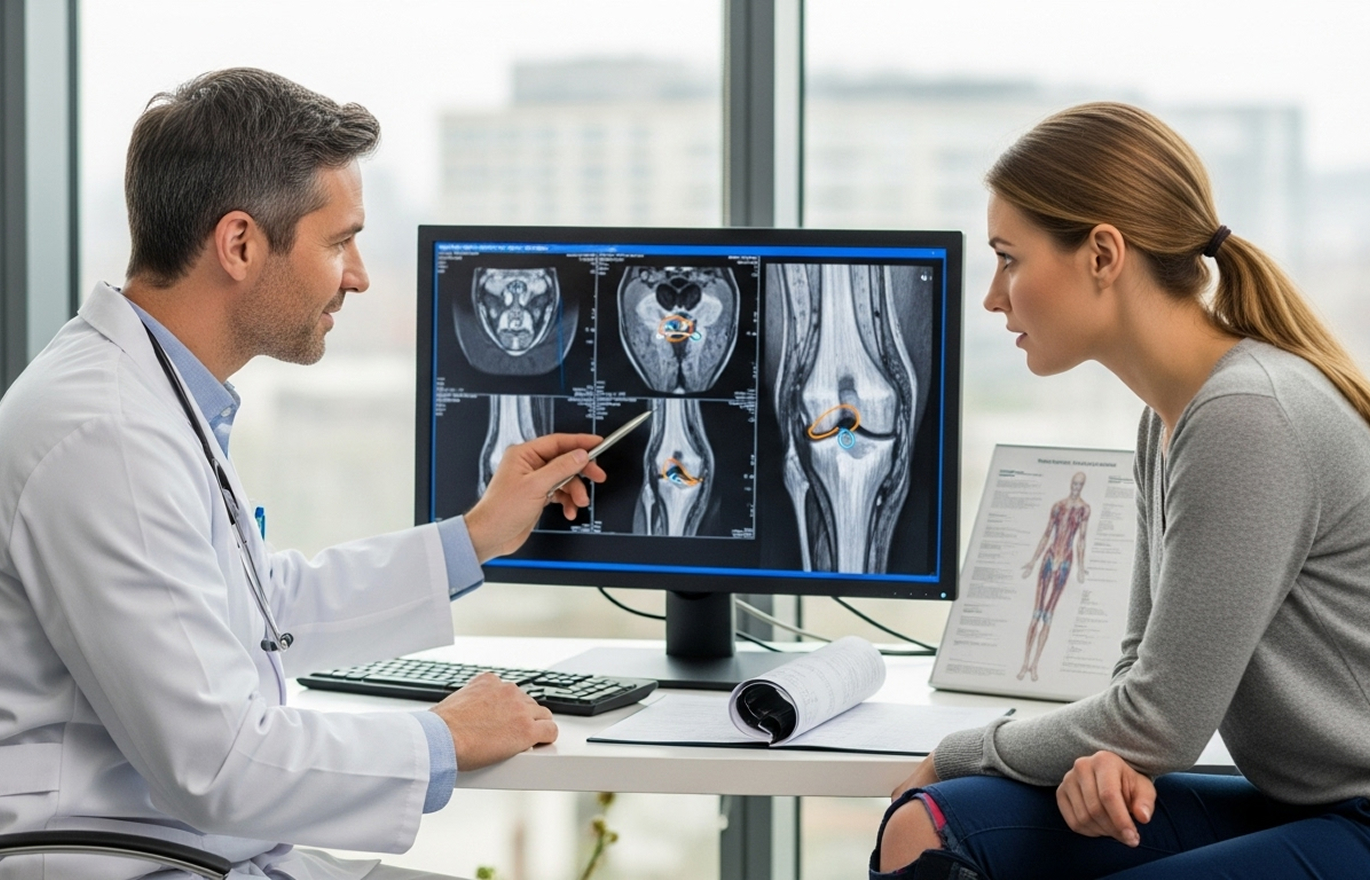
This is the gold standard for diagnosing ligament injuries. It shows exactly which ligaments are torn, assesses the menisci and cartilage, and guides surgical planning.

CT Angiography

Used if there's concern about popliteal artery damage.

Nerve Conduction Studies

May be used if nerve injury is suspected, to assess function and recovery potential.

Expert Evaluation for Complex Knee Injuries

Accurate diagnosis and evidence-based management are critical for optimal recovery after a multiligament knee injury. Arrange a consultation with Dr Allom to discuss the best path forward for your knee.

Treatment Philosophy and Timing

Optimal management requires careful strategic planning.

Acute vs Delayed Reconstruction

Acute (within 2-3 weeks)

Sometimes necessary if there's an associated artery repair, open wound, or irreducible dislocation. However, operating on a very swollen, inflamed knee increases the risk of stiffness (arthrofibrosis).

Delayed (6-12 weeks post-injury)

This is generally preferred for most multiligament injuries. It allows swelling to settle, initial range of motion to be regained ('prehabilitation'), and reduces the risk of post-operative stiffness. The knee is protected in a brace during this period.

Dr Allom typically favours a delayed reconstruction approach, tailoring the timing to your specific injury and recovery progress to optimise conditions for surgery and reduce complication risks. Source: The American Journal of Sports Medicine - Timing of Multiligament Knee Reconstruction - 2024 (Confidence: 88%)

Staged vs Simultaneous Reconstruction

Simultaneous

All ligaments reconstructed in one large operation (4-6 hours). Requires one anaesthetic and allows unified rehabilitation but is technically very demanding.

Staged

Reconstructions performed in two separate surgeries several months apart. Each surgery is shorter, potentially reducing anaesthetic risk, but the overall treatment time is longer, and costs may be higher.

Dr Allom will discuss the pros and cons of simultaneous versus staged reconstruction based on your specific injury pattern, overall health, and personal preferences during your consultation.

Conservative (Non-Surgical) Management

Rarely Appropriate

For true multiligament injuries causing significant instability, non-surgical management is usually not recommended for active individuals.

Possible Considerations

May be an option for very low-demand elderly patients, those with severe medical conditions preventing surgery, or if a patient fully understands the limitations and accepts persistent instability.

Likely Outcomes

Ongoing instability requiring bracing, limited function, high risk of further meniscal/cartilage damage, and early onset of severe arthritis.

Most patients with multiligament injuries need reconstruction to achieve a stable, functional knee and preserve long-term joint health.

Surgical Reconstruction Techniques

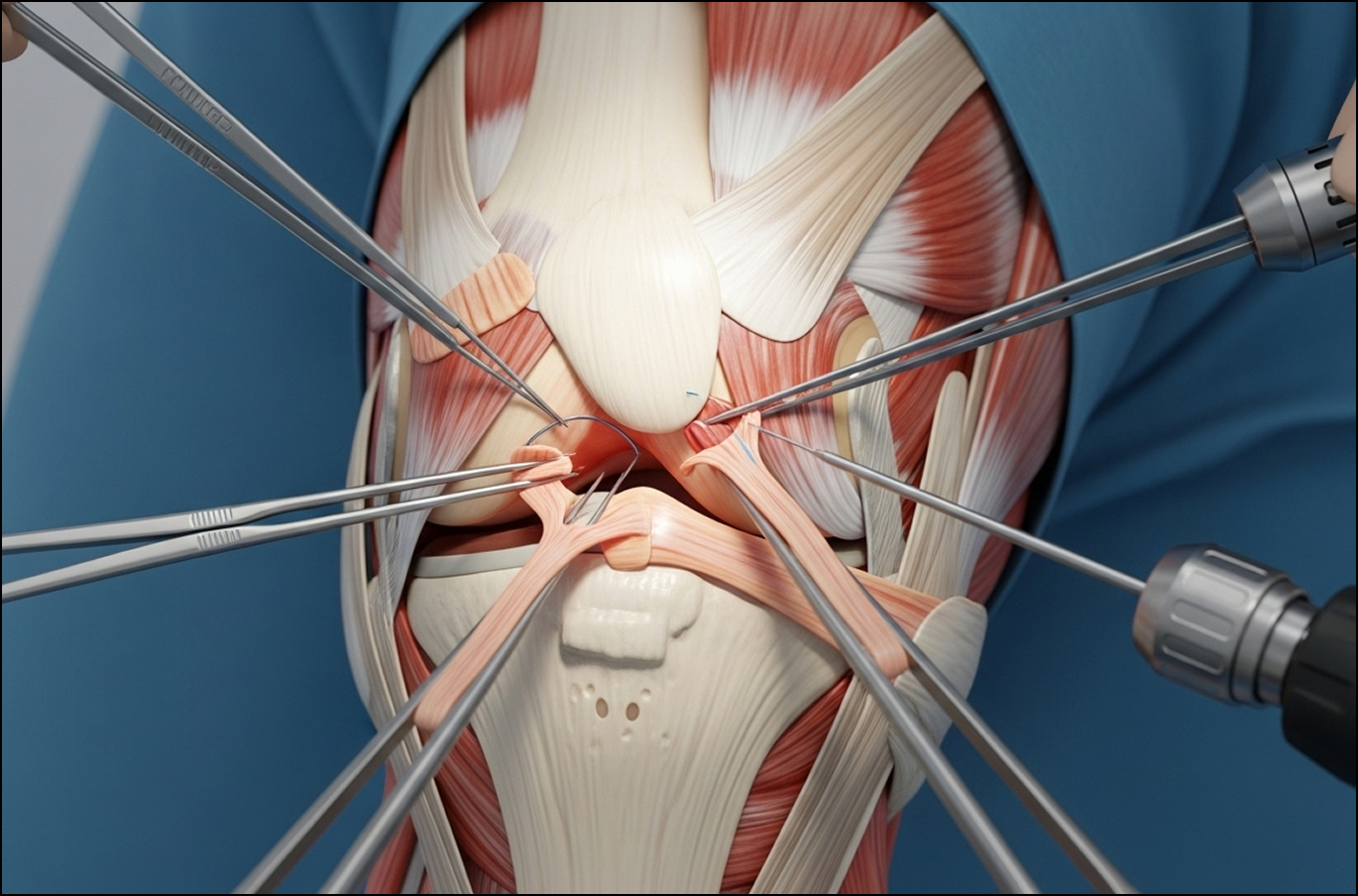
Multiligament reconstruction is a complex operation requiring meticulous planning and execution.

Graft Selection Strategy

Autograft (Your Tissue)

Hamstring, patellar, or quadriceps tendons are strong options but limited in quantity for rebuilding multiple ligaments.

Allograft (Donor Tissue)

Achilles or tibial tendons provide unlimited tissue and avoid taking it from your own body. While carrying a slightly higher re-rupture risk than autograft in some studies, modern processing makes infection risk extremely low.

Dr Allom often uses a hybrid approach. This typically involves using your own hamstring tendon (autograft) for the primary cruciate ligament (like the ACL) and using donor tissue (allograft) for the other ligaments and corner structures. This balances graft strength with tissue availability.

Cruciate Ligament Reconstruction

ACL Reconstruction

Requires precise placement of tunnels in the femur and tibia to replicate the original ligament's attachment points. The graft is tensioned appropriately before fixation.

PCL Reconstruction

Involves drilling a tunnel in the back of the tibia, which is anatomically challenging. Allograft is often used due to the PCL's size. Tensioning is done with the knee bent.

Combined ACL + PCL

Careful tunnel placement is needed to avoid collision. The PCL is usually tensioned first, followed by the ACL.

Collateral and Corner Reconstruction

MCL

Acute tears might be repaired directly. Chronic instability usually needs reconstruction with a graft.

LCL and Posterolateral Corner (PLC)

This is often the most complex part. It requires rebuilding multiple structures (LCL, popliteus tendon, popliteofibular ligament) to restore stability against outward forces and rotation.

Posteromedial Corner (PMC)

ess commonly injured but also requires complex reconstruction if unstable.

Surgical Sequence Example
(KD-III Injury: ACL + PCL + Collateral)

A typical sequence might involve:

Diagnostic Arthroscopy

Camera inserted to fully assess all structures, including menisci and cartilage.

Meniscus Repair

If needed, performed first to allow healing.

PCL Reconstruction

Technically demanding posterior tunnels created and graft passed.

ACL Reconstruction

Tunnels created, graft passed and tensioned after PCL.

Collateral/Corner Reconstruction

MCL or LCL/PLC reconstructed as required.

Tension Balancing

All grafts tensioned sequentially and fixed securely.

Stability Check

Knee moved through range of motion to confirm balanced stability
Surgery duration is typically 4-6 hours for such complex reconstructions

Recovery and Rehabilitation

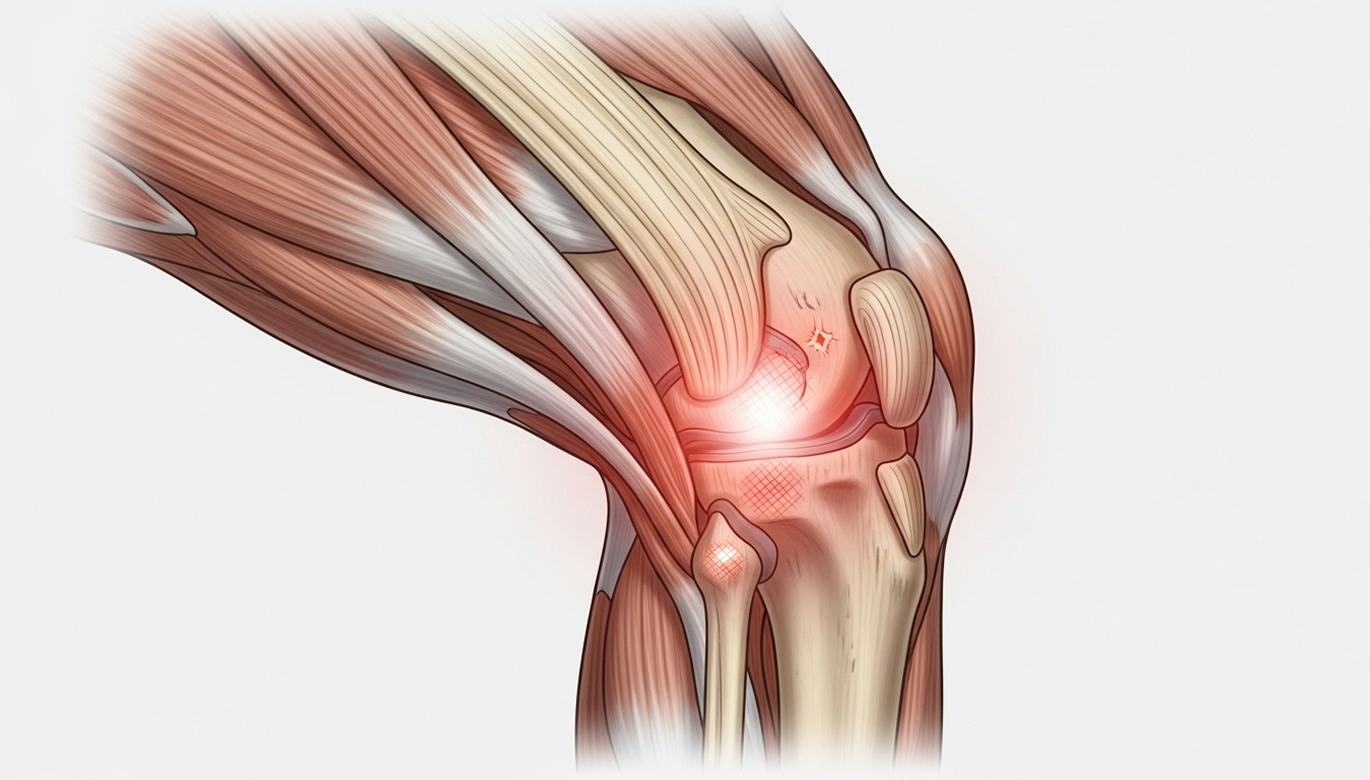
Recovering from multiligament reconstruction is a marathon, not a sprint. It is significantly longer and more complex than recovery from an isolated ligament surgery and demands your full commitment.

Phase 1

Weeks 0-6

Protection and Early Motion
This initial phase is highly restrictive to protect the multiple healing grafts. Expect to be non-weight-bearing or only partially weight-bearing, using crutches, and wearing a hinged knee brace locked straight for walking. Range of motion will be limited (e.g., 0-60 degrees initially). Focus is on gentle motion, ice, and elevation.

Phase 2

Weeks 6-12

Progressive Loading
You will gradually increase weight-bearing, aiming for full weight-bearing by 12 weeks. Range of motion goals increase (e.g., 0-120 degrees). Exercises like stationary cycling, pool walking, and basic closed-chain strengthening begin. No running or impact activities allowed.

Phase 3

Months 3-6

Strengthening
Focus shifts to more advanced gym-based strengthening, balance, and proprioception exercises. Low-impact cardio like elliptical or rowing may start. Still no running, jumping, or pivoting.

Phase 4 (Months 6-12)

Return to Activity
If strength and stability goals are met, straight-line running may begin around 6-7 months. Agility drills and sport-specific training follow progressively. Clearance requires meeting strict criteria, including strength symmetry (>85% of uninjured leg) and passing functional tests.

Phase 5 (Months 12-18)

Full Return to Sport
The timeline varies significantly based on the injury complexity and sport demands. Low-impact activities might resume around 9-12 months. Cutting/pivoting sports typically require 12-15 months. Contact sports often need 15-18 months or longer. This is considerably longer than the 9-12 months typical for an isolated ACL reconstruction.

Phase 4

Months 6-12

Return to Activity
If strength and stability goals are met, straight-line running may begin around 6-7 months. Agility drills and sport-specific training follow progressively. Clearance requires meeting strict criteria, including strength symmetry (>85% of uninjured leg) and passing functional tests.

Phase 5

Months 12-18

Full Return to Sport
The timeline varies significantly based on the injury complexity and sport demands. Low-impact activities might resume around 9-12 months. Cutting/pivoting sports typically require 12-15 months. Contact sports often need 15-18 months or longer. This is considerably longer than the 9-12 months typical for an isolated ACL reconstruction.

Outcomes and Realistic Expectations

It is vital to have realistic expectations about what multiligament reconstruction can achieve.

Outcomes Summary

Stability

Most patients (80-90%) achieve a functionally stable knee. A small percentage (10-20%) may have mild looseness that usually does not cause symptoms. Revision surgery for instability is uncommon (<5%).

Return to Activity

Rates vary. Around 90-95% return to daily activities without major limitation. Return to recreational sport is around 60-75%. Returning to your pre-injury competitive level is possible but less certain (40-60%). Elite/professional return rates are lower (25-40%). Source: The American Journal of Sports Medicine - Multiligament Knee Injury Return-to-Sport Outcomes - 2024 (Confidence: 90%)

Patient Satisfaction

High satisfaction rates (70-85%) are achieved when patients understand the goal is a stable, functional knee, not necessarily a "normal" pre-injury knee.

Range of Motion

Most patients achieve a functional range of motion (around 120-130 degrees of bend). However, the risk of significant stiffness (arthrofibrosis) is higher (5-15%) than after isolated ligament surgery.

Long-Term Arthritis Risk

Post-Traumatic Arthritis

Unfortunately, even with successful reconstruction, there is a significant risk (20-40%) of developing knee arthritis 10-15 years after a severe multiligament injury. This risk is higher if you also had cartilage damage or a meniscectomy (meniscus removal) at the time of injury.

Why it Happens

The arthritis risk mainly relates to the severity of the initial trauma and any cartilage damage sustained then. Ligament reconstruction aims to prevent accelerated arthritis caused by ongoing instability, but it cannot undo the initial joint surface injury.

Complications and Challenges

Due to their complexity, multiligament reconstructions have higher potential complication rates compared to simpler knee surgeries.

Surgical Complications

Potential risks include:
Infection
Risk is around 2-5%
Nerve Injury
Risk around 3-8%, particularly to the common peroneal nerve affecting foot movement.
Graft Failure
Risk around 5-15%, often related to another injury or not following rehabilitation restrictions.
Stiffness (Arthrofibrosis)
Risk around 5-15%, requiring intensive physiotherapy or sometimes further surgery.
Vascular Injury
Very rare (<1%) but serious.
Dr Allom uses meticulous techniques and protocols to minimise these risks, which will be discussed fully during your consultation.

Functional Limitations

Even with a successful reconstruction, some persistent symptoms are common:
  • Mild swelling with increased activity (30-40% of patients).
  • Occasional ache or discomfort, especially with weather changes.
  • A feeling of slight difference compared to the uninjured knee.

Psychological Impact

The severity of the injury and the lengthy rehabilitation can be psychologically challenging. Fear of re-injury is common. Accessing support networks or psychological counselling can be beneficial during recovery.

Why Multiligament Cases Need Subspecialist Care

The complexity and technical demands of these injuries make subspecialist expertise crucial for achieving the best possible outcome.

Why Subspecialist Expertise Matters

Advanced Technical Skills

Requires mastery of multiple reconstruction techniques, complex corner repairs, precise tunnel placement, and simultaneous tension balancing.

Comprehensive Planning

Needs detailed MRI analysis, strategic sequencing of reconstruction steps, appropriate graft selection, and anticipation of potential difficulties.

Better Outcomes

Studies show surgeons who perform a higher volume of these complex cases (>10 per year) generally achieve better results. Specific fellowship training in complex knee reconstruction also correlates with improved patient outcomes.

Why Choose Dr Richard Allom for Multiligament Reconstruction?

Fellowship-Trained Knee Subspecialist

Possesses dual UK and Australian qualifications (FRCS (Eng), FRACS (Orth) with specific fellowship training in complex knee reconstruction techniques, including ACL/PCL injuries and corner instability.

Comprehensive Technical Expertise

Experienced in managing the full spectrum of multiligament injury patterns (KD-I through KD-V), using both autograft and allograft tissues, and performing anatomic reconstructions of all major ligaments and corner structures.

Evidence-Based Practice

Treatment recommendations are grounded in the latest peer-reviewed research regarding optimal timing, techniques, and rehabilitation for multiligament injuries.
Realistic Communication
Dr Allom provides a transparent discussion of the injury's complexity, surgical risks, and achievable outcomes, ensuring you have realistic expectations for your recovery.
Regional Accessibility
Provides this high level of subspecialist care locally across South West Sydney (Gledswood Hills, Campbelltown, Liverpool) and the Mid North Coast (Taree, Forster), potentially saving patients the need to travel to major Sydney trauma centres.

Realistic Communication

Dr Allom provides a transparent discussion of the injury's complexity, surgical risks, and achievable outcomes, ensuring you have realistic expectations for your recovery.

Regional Accessibility

Provides this high level of subspecialist care locally across South West Sydney (Gledswood Hills, Campbelltown, Liverpool) and the Mid North Coast (Taree, Forster), potentially saving patients the need to travel to major Sydney trauma centres.

Next Steps

What to Bring: Please bring your referral letter, all relevant imaging studies (X-rays, CT scans, MRI if performed), and your list of current medications to your consultation.
Convenient Locations in Two Regions

I consult and operate from five locations, providing local access to subspecialist expertise without the need for long-distance travel.

South West Sydney Locations

Phone Number

04 3818 3832

Gledswood Hills

The George Centre, Suite 12, 1A The Hermitage Way

Campbelltown

Centric Park, Level 3, 4 Hyde Parade

Liverpool

Sydney South West Private Hospital, Suite 3.02, 24-40 Bigge Street

Mid North Coast Locations

Phone Number

02 6551 0722

Taree

Mayo Private Hospital Specialist Suites, 2 Potoroo Drive

Forster

Dolphin Suites Consulting Rooms, 33 Breckenridge Street

Book Your Consultation

©2026 Dr Richard Allom. All rights reserved.

Oxford Knee Score Questionnaire

Please answer the following 12 questions about your knee, considering your symptoms over the past 4 weeks. Select one answer for each question.